
Every year in May, a family role comes to the fore that often remains unacknowledged throughout the rest of the year: that of mother. Mother’s Day is celebrated in many countries worldwide – a day often perceived as a purely commercial event caught between the floral and confectionery industries. Yet its roots reach deep into social and religious movements of the early 20th century.
Historically, festivals in honor of mother goddesses were anchored in antiquity, festivals such as those in the cults of Cybele or Rhea. However, Mother’s Day in its current secular form is inextricably linked to the name of the American Methodist Anna Marie Jarvis. Inspired by her own mother’s social activism, she organized a “Memorial Mother’s Day Meeting” in Grafton, West Virginia, in 1907. Jarvis’s original vision was a day of remembrance and gratitude within families. The fact that the day was finally declared a national holiday in the USA in 1914 marked the beginning of a global success story – and, simultaneously, the beginning of its appropriation by commercial interests, a development that Jarvis herself later bitterly lamented.
British “Mothering Sundays”
In Great Britain, the geographical origin of the compositions discussed in this post, the situation is more complex. Here, the modern American tradition meets the significantly older “Mothering Sunday.” This tradition is deeply rooted in ecclesiastical practice and takes place as early as March or April, on the fourth Sunday of Lent. Originally, the term did not refer to the biological mother, but to the “Mother Church” in which the faithful had received the sacrament of baptism. It was the day when domestic servants, often young women working far from home, were given the day off to visit their home church and, by extension, their families.
This historical context is crucial for understanding the songs of composers like Alicia Adélaïde Needham or Liza Lehmann: they were created in a society where motherhood held deep religious, social, and increasingly national-identity significance.
Even though most of the songs examined here were written shortly before the official legal introduction of International Mother’s Day, they breathe the same spirit of the time. They offer a fascinating panorama of the idealization of motherhood in the late 19th and early 20th centuries. It is an image of “Ideal Motherhood” that was cemented in the Victorian and Edwardian eras and continues to be perpetuated, uncritically, in many Mother’s Day traditions today.
But what happens when we look behind the surface of these ideals, ideals that were also meticulously translated into music? Underlying the gentle lullaby rhythms and pastoral lyrics lies a far more complicated story. Using the examples of the Irish composer Alicia Adélaïde Needham (1863–1945) and her British contemporary Liza Lehmann (1862–1918), it can be shown that the composition of lullabies and “scenes of childhood” was often less an expression of domestic tranquillity and more a highly professional, strategic positioning within a patriarchal music market that frequently tolerated women only in these “domestic” niches.
Mother’s Songs – A Promising Brand for Female Composers?
“Mrs. Needham is good at writing ‘mother’s songs’ – how charming was her ‘Husheen’,” a contemporary remarked in 1902 in the publication The B.P., a Popular Paper for the British Public. This contemporary reception raises a crucial question: what was the basis for this almost stereotypical attribution, and why was it so attractive then for professional female composers?
A look at the beginning of Needham’s career provides some insight. In 1894 her first publication, the collection Four Lyrics, was released by Novello, Ewer & Co. in London. That she chose “Irish Lullaby” as the first number in this collection suggests a well-considered strategic decision. A critic in the Monthly Record (1 Jan. 1895) drew parallels to Anton Rubinstein’s famous “Melody in F” (1852), placing the song within a prestigious tradition. Needham herself proudly recalled in her unpublished autobiography that this work “went the round of the world” (Needham: Daughter of Music).
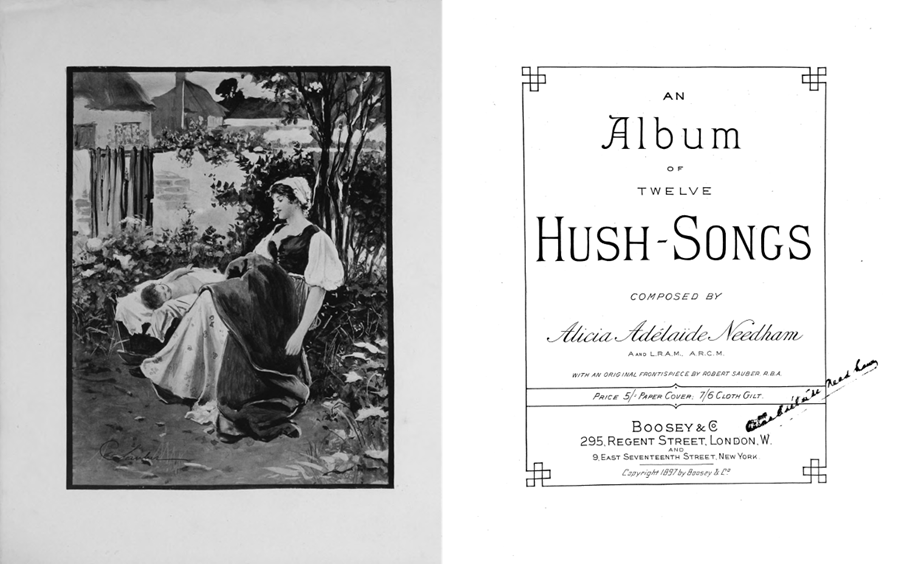
Musically, she precisely catered to the expectations of the genre: the measured tempo (Andante cantabile), the gentle dynamics (almost consistently piano), and performance markings such as con tenerezza (with tenderness) evoked the domestic intimacy sought by the bourgeois audience. Two years later, at a time when she was married but still childless herself, she solidified this reputation with An Album of Twelve Hush-Songs, which she tellingly dedicated to her own mother. The most successful song from this collection, “Husheen,” went through numerous reprints and appeared in various arrangements. It was performed on concert stages and recorded multiple times.
Capitalizing on ‘Centuries of Childhood’
Needham’s focus on lullabies was not a mere artistic whim; it expressed the values of a society that idealized childhood as a phase of life with almost obsessive intensity. This trend can be situated within the context of Philippe Ariès’s much-analysed theory about Centuries of Childhood (New York, London, 1960). Ariès describes how a completely new awareness of childhood as a distinct, protectable stage of life emerged between the late Middle Ages and the 18th century.
By the turn of the 20th century, this awareness was fully developed and had created a lucrative market for children’s songs and lullabies. However, the target audience for this music was by no means limited to children. As Sophie Fuller has aptly noted: “Children’s songs were a way of offering a jaded late 19th-century audience a new and usually light-hearted view of familiar subjects while adding an element of nostalgia for lost innocence” (Fuller, 234-35).
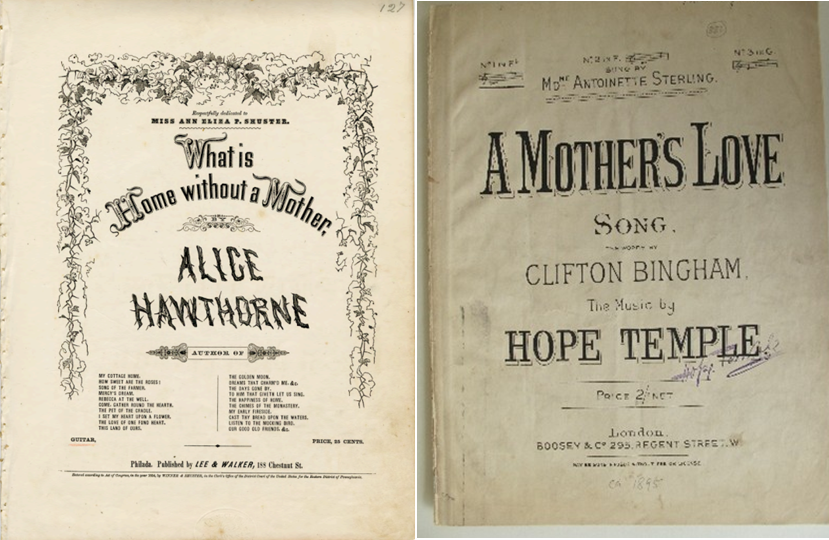
Famous compositions like “What Is Home Without a Mother?” – a highly sentimental 19th-century song and poem that was popular in the United States and Britain, composed by Septimus Winner under the pseudonym Alice Hawthorne – as well as works like “A Mother’s Love” (c. 1895) by Hope Temple, also known as Mrs. André Messager, illustrate how emotionally charged the presence or absence of the mother had become.
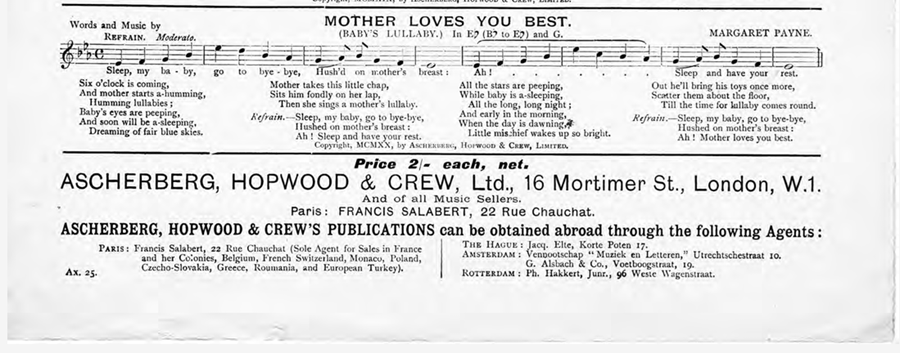
For several years, Margaret Payne’s lone published song, “Mother Loves You Best” (1920), enjoyed a wide popularity. Payne strategically dedicated her song to Mr. J. A. Whitehead, who was then widely credited with having promoted the day of 8 August in 1916 (and in the years that followed) as Mother’s Day throughout the British Empire. Inevitably, it also marked the onset of the third year of devastating war. This day in 1916 was the second anniversary of the Defence of the Realm Act. Whitehead sold this commemorative celebration as a chance to honor mothers for all they had given, including the lives of their sons.
This subject matter was by no means a purely female domain. Male composers and lyricists served the genre just as intensively. They too reinforced the image of the self-sacrificing mother as the moral center of the household; indeed, they helped make this image a cultural norm.
While for men it was merely one profitable subject among many, for female composers, the choice of this subject represented an existential strategic necessity. In an era where women who claimed their place in genres usually considered masculine – such as symphonies and operas – often met with massive resistance, lullabies and children’s songs offered a safe, culturally acceptable haven.
For a woman, composing or singing “children’s songs” was s secure strategy to demonstrate professionalism and artistic competence without openly inviting rejection. Since femininity in the 19th century was inextricably linked to motherhood, engaging with this topic was considered “natural.” Thus, a composer like Alicia Adélaïde Needham could find public acclaim, ironically, even without being a mother herself at that point. The “brand” of the maternal composer was born even before the actual experience of motherhood.
Public Staging as a (Composing) Mother
With the birth of her son Joseph Needham on 9 Dec. 1900, a decisive shift occurred in Alicia Adélaïde Needham’s career: the previously strategically chosen subject of motherhood was now validated by her own biography. Needham quickly integrated her role as a mother into the marketing of her music. By dedicating numerous compositions to Joseph, she became tangible to the public as a “composing mother” (Bagge, 239-45).
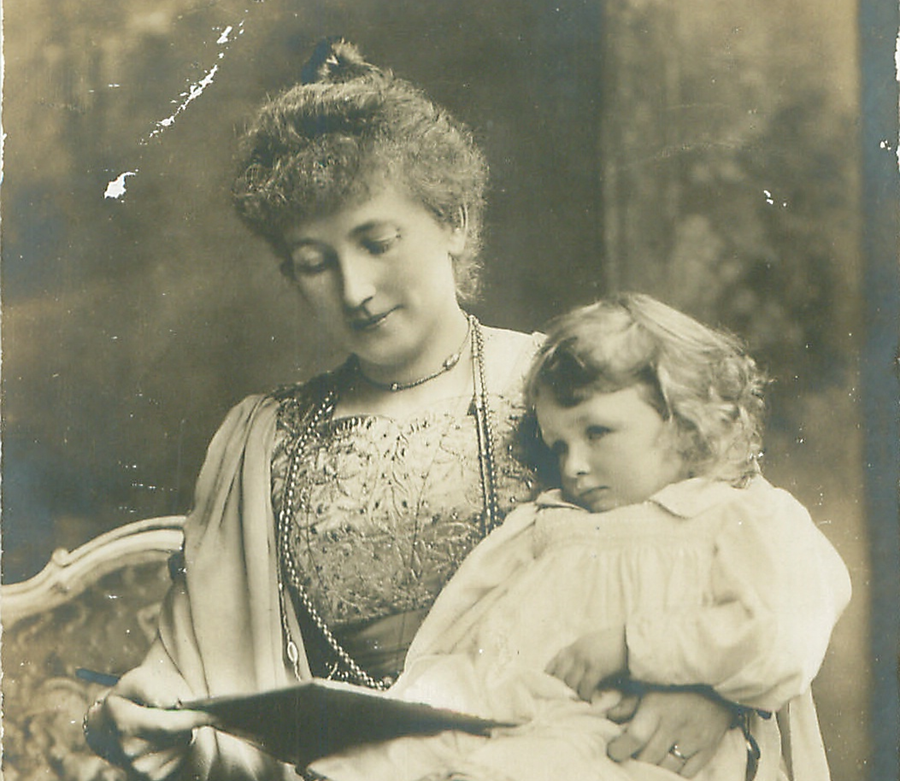
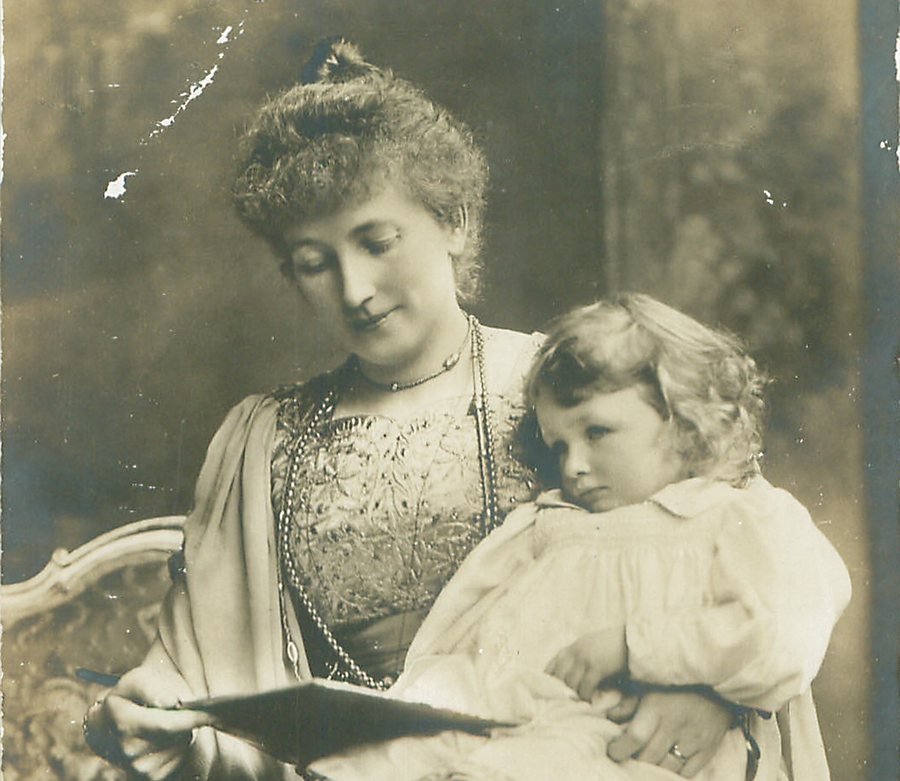
This strategy is particularly evident in the 1912 collection Songs for Little Singers. The dedication reads: “To my little boy Noel [Joseph] Terence Montgomerie Needham.” The collection contained more than just the 30 short compositions for “Little Singers”; a photograph of the composer with her son on her lap greeted the reader upon opening the edition. In the context of the time, this visual representation was a highly emotional signal: it suggested that the music emerged directly from maternal daily life and the bond with the child, which reduced the distance between the artist and the audience and likely boosted sales in the bourgeois family market.
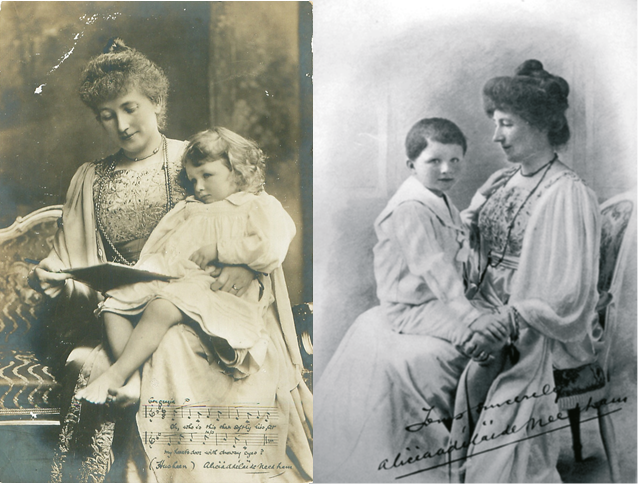
Needham was not the only one to use this visual language. In Part 2, we will return to discuss Liza Lehmann. And there is more to say about Alicia Adélaïde Needham.
Notes
Maren Bagge, Favourite Songs. Populäre englische Musikkultur im langen 19. Jahrhundert (Hildesheim, Zurich, New York: Georg Olms Verlag, 2022).
Sophie Fuller, Women Composers During the British Musical Renaissance, 1880–1918 (London: King’s College University, 1998).
Alicia Adélaïde Needham, A Daughter of Music, GB-Cu, MS Needham A.97 p. 28.
Needham photo: reproduction of a photograph featuring the composer and her son, included in Songs for Little Singers (1912), printed in Bagge 2022, p. 242.
Regarding songs about the absence of a mother, see Christopher Reynolds’s recent WSF post.
Hope Temple, “A Mother’s Love: Song,” words by Clifton Bingham (London: Boosey, [ca. 1895]).
On J. A. Whitehead and Mother’s Day in the United Kingdom, see, for example, London Daily Graphic, 12 July 1916; and Hull Daily Mail, 5 Aug. 1920.